“When should I invest” is a popular question when people talk to me about financial planning. Of course, it may not be those exact words, but it seems like everyone is trying to time the market. This trend has become so alarming that Charles Schwab recently launched an advertising campaign reminding the world that investing is NOT gambling.
Full disclosure, yes, Charles Schwab is one of the custodians we use for our clients’ accounts. However, if that was not the case, I would still applaud their campaign because it is such an important message. With our instant gratification society, and the explosion sites like Kalshi, it’s easy for us to place our investments in the same category.
I do believe people are starting to realize the difference, especially if you’re in my social circle. After all, I preach that message constantly! Of course, it never hurts to give everyone a reminder, so here is my core belief:
First, throughout history, investing has been the best way to build wealth. Second, everyone can invest with reasonable expectations. Third, time is a great equalizer and the greatest resource we have, so use it!
To me, investing is not a game; it is a responsibility.
Investing is a long-term endeavor. It is not some get rich quick scheme where your friend makes ridiculous promises, takes your money, and you never speak again. Treating investing like gambling, or timing the market, can be one of the greatest mistakes we make on our financial journey.
 I read an article recently about the financial services industry in the United States. It said there were 8.4 million people employed in the financial services industry in 2023. Also, it said firms spent $152 billion on compliance alone. That’s all in effort to show clients that their advisor is trustworthy.
With all of the resources being deployed by the financial services industry, there are still risks to investing. Now do you honestly think you can time the market better than them? Your neighbor’s “hot tip” or that new article you read are already old news in the world of finance. It stinks, but it’s true.
Going back to our initial question When Should I Invest?
Honestly, you should always be investing at some level. You are already investing through your daily decisions. Look at your children. Local schools started the new year last week. By sending your children to school, you are making them invest in their future.
Typically, our children spend 13 years (K-12) being developed into contributors to our society. Some will go straight to work after high school, while others delay their career with more school. Our investments should be viewed similarly to our children’s education.
Each child must attend school in order to pursue their education. Money must be invested in order for it to grow, so you’ll have a chance to reach your reasonable goals.
I believe looking at your whole life as one long investment time horizon helps us see the big picture.
Waiting to invest for the “right time” is in itself an investment. Unfortunately, it’s not a smart investment because there will never be a “right time.” There is always going to be a distraction, or something will come up, which is why we just have to take that first step.
The first part of our life is the education phase, which we have already established as a minimum of 13 years. Then, we have our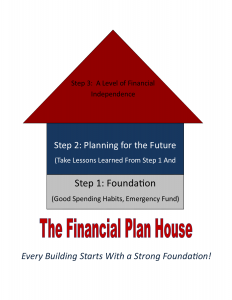 career, which financial planners call the accumulation phase. This is when you receive a salary and are ACCUMULATING resources.
Normally, the accumulation phase lasts 25 to 30 years. Hopefully, your salary increases over that time, but you still only have one chance to maximize this phase. Remember, time is the greatest resource we have, we must use it.
Pensions and other Defined Benefit Plans are rare, so we have a personal responsibility to save money during the accumulation phase. Defined Benefit Plans have been replaced by Defined Contribution Plans, such as 401k’s. Sadly, most of us don’t contribute enough to it. Many companies auto-enroll their new employees into these plans, but employees can still fall short in their contributions.
What does that mean? To put it bluntly, your comfort level during retirement and even when you can retire depends on you. Yes, I can help with it, but nothing can happen until you take that first step.
This doesn’t have to be a drastic life change. It can mean one trip to the beach during the summer instead of five. Remember when McDonald’s was a special childhood treat, not part of our family’s weekly menu?
No, we didn’t like it, but our parents really nailed it with spending discipline. Of course, that isn’t true for everyone, but I know mine did. Looking back on my childhood with the lens of a financial planner, I’m proud of the life my parents built together as our family’s Co-CEOs.
I believe we can still learn from our parents’ generation when working on our financial plan.
Yes, we have more and different expenses. Money flows through many different channels, but the fundamentals are still the same.
Inflation takes away the purchasing power of our money, so we fight that by investing. We call that “putting your money to work.” If your money isn’t invested at some level, it just sits in your bank account getting dusty and losing purchasing power.
Yes, investing has risks, but not investing is risky too. By not investing, you are almost guaranteed that your money will lose purchasing power.
I understand you’re scared. Fear is natural when trying something new, but our greatest successes can happen when we overcome fear. I’m sure your children were a little scared during that first week of school. I always was and you probably were too. We went anyway because the reward outweighed the risk.
By investing in your education, you have become an employee, an employer, a wife, a mother, a husband, and a father. None of these could have happened if you didn’t listen to your parents, face your fears, and go to school.
I do believe we face a different challenge than our parents as we save for our future.
Again, we need to be consistent with our retirement contributions because we probably won’t receive guaranteed income from a pension. This means that being IN the market is more important than timing the market. Our parents could wait for a calm  market; we cannot afford that luxury.
During our parents’ accumulation phase, savings accounts at their local banks were much higher than they are now. Our parents could get 8% return on their savings with easy access to the money and have FDIC insurance. They would be crazy not to accept that deal.
In finance and economics there is always a good side and a bad. My dad was quick to remind us that the mortgage on our home was 16%. We can barely afford 6% mortgages today, so nobody wants a 16% mortgage. We’ll just have to live with lower savings rates and face our fear of investing.
Yes, there are still risks of loss, but the days of frauds and shadow deals are mostly gone. Instant information allows us to ruin a scammer’s life in seconds. Reputation is everything in financial services, so we’re doing everything we can to give you a positive experience.
A new investing challenge we face is called “stacking,” which I read about it in the Journal of Financial Planning.
Life has events that cause major changes in our portfolio and the overall market. These events may be environmental, like the war with Iran. They can also be personal, like illness.
During our parents’ accumulation phase, these events still occurred, but they were more spaced out. Our parents could afford to wait for the market to calm down. Today, new events occur before the market can recover from the last one, making it virtually impossible to wait for “the right time to invest.”
This creates the “stacking problem.” Imagine many airplanes trying to land on the same runway. We manage that with air traffic controllers and other staff working to make air traffic possible.
Over the past 5 years we have had a pandemic, inflation, war in Europe, war in the Middle East, and numerous weather disasters. Obviously, there is little time for the market to recover.
Fortunately, major market moves, both up and down, can be beneficial for people in the accumulation phase of their financial journey.
I’ve written on dollar cost averaging before, but this tool can help with market stacking and limited savings contributions. By investing a consistent amount monthly, your money can buy more during market downturns, lowering your average costs. I think it is the investor’s way to “get more bang for your buck.”
Running out of money is a central fear of retirement planning for all people. We cannot ignore it hoping the problem solves itself. However, the simple steps above can put you in a better position. Remember, we only get one chance at this. Email me!